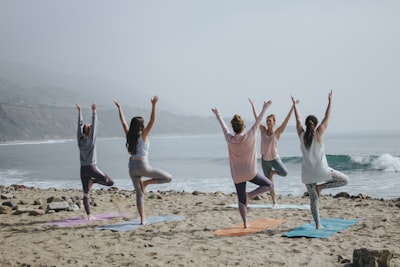
Barre isn't just for dancers in fancy studios. It's one of the smartest workouts you can do as you get older — and you can do most of it from a chair.
Barre combines ballet-inspired movements with strength training. Think small, controlled pulses, gentle leg lifts, and isometric holds that target your glutes, thighs, core, and arms. The best part? You don't need a ballet barre or any special equipment. A sturdy chair and a little space is all it takes.
Katherine, 72, started barre after hip replacement surgery. "I was scared to exercise at all," she says. "But the small, controlled movements felt safe. After three months, my balance was better than before the surgery." Stories like hers are common — barre's low-impact nature makes it ideal for aging bodies.
Here are the 7 best barre exercises for seniors, with seated and standing modifications so you can work at your own pace.
Why Barre Works for Seniors
Barre is different from regular strength training because it uses small, repetitive movements that fatigue muscles without stressing your joints. You're not lifting heavy weights — you're doing lots of tiny pulses that build endurance and muscle tone over time.
How to Start Barre Safely
Before you jump in, here are a few ground rules:
- Use a stable chair. Pick one that doesn't slide or tip. Place it against a wall if you're unsure.
- Start seated. Every standing exercise has a seated option. Master the seated version first.
- Listen to sharp pain. Muscle fatigue is fine. Sharp or shooting pain means stop.
- Breathe. Don't hold your breath during pulses. Exhale on the effort, inhale on the release.
- Check with your doctor if you have osteoporosis, recent joint surgery, or uncontrolled blood pressure.
The 7 Best Barre Exercises for Seniors
Each exercise includes both a seated and standing option. Start with the seated version and progress when you feel ready.
1. Seated Leg Extension
Targets: Quads, hip flexors, core stability
Sit tall with your back away from the chair. Hold the seat edges for support. Extend your right leg straight out, flexing your foot. Pulse the leg up an inch — small, controlled movements. Do 12 pulses, then hold at the top for 5 seconds. Lower and repeat on the left leg. Complete 2 rounds per leg.
Tip: Keep your upper body still. If your torso rocks, you're using momentum, not muscle. Slow it down.
2. Chair Squat Pulses
Targets: Glutes, hamstrings, quads
Stand behind your chair, holding the back with both hands. Lower into a shallow squat — imagine you're about to sit down. Don't go too deep; a few inches is enough. Pulse up and down about an inch for 12 counts. Keep your knees pointing forward and your back straight.
Tip: Keep most of your weight in your heels. If you feel your knees strain, you're squatting too low.
3. Seated Glute Squeeze
Targets: Glutes, lower back
Sit tall with your hands resting on your thighs. Squeeze your glute muscles together as hard as you can. Hold for 2 seconds, then release fully. Repeat 15 times. This looks like nothing is happening, but you'll feel it after 10 reps.
Tip: Squeeze like you're holding a coin between your cheeks. Full release between each squeeze matters.
4. Standing Leg Lift (Side)
Targets: Outer thighs, hip abductors, balance
Stand behind your chair, holding the back gently. Shift your weight to your left leg. Lift your right leg out to the side, keeping your foot flexed and your standing leg slightly bent. Lift only as high as feels stable — 6-8 inches is plenty. Lower slowly without touching the floor. Do 12 lifts, then switch sides.
Tip: Don't lean to the opposite side. Imagine your torso is a still column and only your leg moves.
5. Seated Arm Circles (Barre-Style)
Targets: Shoulders, upper back, arms
Sit tall with your shoulders down and back. Extend your arms straight out to the sides at shoulder height, palms facing down. Make small, controlled circles forward — about the size of a dinner plate. Do 10 circles forward, then 10 backward. For an extra challenge, hold light hand weights (1-3 lbs).
Tip: If your shoulders creep up toward your ears, lower your arms slightly and relax your neck.
6. Standing Calf Raises (Barre-Style)
Targets: Calves, ankle stability
Stand behind your chair, holding the back for balance. Rise up onto your toes as high as you can. Hold at the top for 2 seconds, then lower slowly. Repeat 15 times. For a challenge, do 10 single-leg raises on each side.
Tip: Keep your ankles stable. If they wobble, bring your feet wider apart or hold the chair with both hands.
7. Seated Torso Twist (Barre Variation)
Targets: Obliques, spine mobility, core rotation
Sit tall with your hands placed on your shoulders (elbows pointing out to the sides). Keeping your hips still, twist your upper body to the right as far as comfortable. Hold for 2 seconds, return to center, then twist left. Repeat 10 times each side. Imagine you're looking behind you without moving your hips.
Tip: Go only as far as your spine allows. If you feel pinching, reduce the range of motion.
Barre vs Pilates vs Yoga for Seniors
People often confuse barre with Pilates and yoga. They're all excellent — but they work differently. Here's how they compare:
| Feature | Barre | Pilates | Yoga |
|---|---|---|---|
| Primary focus | Small, isolated muscle pulses | Core strength & spinal alignment | Flexibility, balance & breath |
| Movement style | High-rep, low-range pulses | Controlled, flowing sequences | Static holds & stretches |
| Joint impact | Very low | Low | Low to moderate |
| Lower body focus | High (glutes, thighs, calves) | Moderate (core primary) | Moderate (varies by style) |
| Chair adaptation | Excellent — most moves work seated | Good — many moves adapt | Good — chair yoga is common |
| Best for | Building endurance & muscle tone | Core strength & posture | Flexibility & stress relief |
You don't have to pick one. Many seniors combine barre (for lower-body strength) with yoga (for flexibility) and get the best of both worlds.
Sample Barre Routine (20 Minutes)
Here's a full routine you can follow from home. Do each exercise for one set, rest 30 seconds, repeat the whole circuit for round 2.
| Exercise | Reps | Time |
|---|---|---|
| Seated Leg Extension | 12 per leg | 2 min |
| Chair Squat Pulses | 12 | 1.5 min |
| Seated Glute Squeeze | 15 | 1.5 min |
| Standing Leg Lift (Side) | 12 per leg | 2 min |
| Seated Arm Circles | 10 each way | 1.5 min |
| Standing Calf Raises | 15 | 1.5 min |
| Seated Torso Twist | 10 each side | 2 min |
| Total round 1 | ~12 min |
Take a 1-minute break, then repeat. Two rounds = about 25 minutes total. Three times per week is plenty.
Frequently Asked Questions About Barre for Seniors
What is barre exercise for seniors?
Barre for seniors is a low-impact workout that mixes ballet-inspired movements with strength and balance exercises. You use a chair for support and focus on small, controlled pulses that target your legs, glutes, arms, and core. It's gentle on the joints but challenging enough to build real strength.
Can seniors do barre if they have arthritis?
Yes, and many seniors with arthritis find barre particularly helpful. The small, controlled movements don't jar the joints like running or jumping. Start with seated variations only, choose a padded chair, and stop any movement that causes sharp pain. Always check with your doctor first, especially if you have hip or knee arthritis.
How is barre different from Pilates for seniors?
Barre uses small, isolated pulses (often inspired by ballet) to fatigue specific muscles, while Pilates focuses on larger, flowing movements that build core strength and spinal alignment. Barre typically hits the lower body harder — glutes and thighs — while Pilates emphasizes the abs and back. Both are excellent for seniors, and many people do both.
How often should seniors do barre exercises?
Three to four times per week, with a rest day between sessions, is ideal. Start with 15-20 minute sessions. As your strength builds, increase to 30-40 minutes. Your muscles need recovery time to rebuild — that's when the real strength gains happen.
What equipment do I need for barre as a senior?
You need a sturdy chair with a straight back, comfortable clothes, and a small space. That's it. Optional extras include light hand weights (1-3 lbs), a yoga mat for floor work, and a resistance band. You do NOT need a ballet barre — a kitchen counter, a wall, or a sturdy chair back works as your support.
How to Progress Safely
Once the basic exercises feel easy, here's how to level up without risking injury:
- Increase reps — Go from 12 to 15 or 20 pulses per set.
- Add holds — Hold the top of each movement for 3-5 seconds before lowering.
- Drop the chair support — Try standing leg lifts without holding the chair, keeping your hand nearby for safety.
- Add light weights — One-pound weights make a surprising difference in arm circles and leg lifts.
- Slow down — Slower movements mean more muscle engagement. Count to 3 on the way up and 3 on the way down.
When to Skip Barre and See a Doctor
Barre is safe for most older adults, but talk to your doctor before starting if:
- You have osteoporosis with a history of fractures
- You're recovering from hip, knee, or shoulder surgery
- You have uncontrolled high blood pressure
- You have vertigo or inner ear problems that affect balance
- You've been inactive for more than 6 months
Once you get the all-clear, start with the seated version of every exercise. Progress to standing only when you feel stable and confident.
Ready to Start?
Barre is one of the few workouts that actually gets more effective as you age. Small, controlled movements build the kind of functional strength that makes everyday life easier — carrying groceries, getting out of a car, walking up stairs, playing with grandkids.
Start with the 7 exercises above. Do them three times this week. Pay attention to how your body feels the next day — not sore, but aware of muscles you haven't used in a while. That's the feeling of rebuilding strength.
And if you're looking for more guided options, check out our guides on Pilates for Seniors and Dance for Seniors for complementary workouts that pair beautifully with barre.