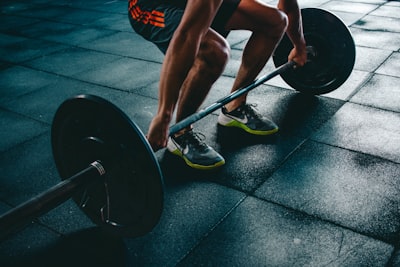
Why Deadlifts Matter as You Age
Deadlifts are one of the most effective exercises for building functional strength that matters in daily life. Lifting groceries, getting out of a chair, bending to pick something up from the floor — these are all deadlift patterns you perform every day without thinking.
As we age, muscle mass naturally declines by 3 to 8 percent per decade after 30. This process, called sarcopenia, accelerates after 60. The deadlift directly counters this by engaging your largest muscle groups — glutes, hamstrings, back, and core — all at once. No other single exercise activates as much muscle tissue in one movement.
A study in the Journal of Strength and Conditioning Research found that adults over 60 who performed deadlifts twice a week for 12 weeks increased lower-body strength by 32 percent and improved walking speed by 18 percent. That translates to real-world independence — being able to carry groceries, play with grandkids, and move through your day without help.
What Are the Key Benefits of Deadlifting After 60?
Deadlifts offer unique advantages for older adults that most other exercises can't match. The benefits go well beyond basic muscle building.
Fall Prevention Through Leg Strength
Falls are the leading cause of injury among adults over 65. The deadlift builds the posterior chain muscles — glutes, hamstrings, and spinal erectors — that keep you upright and stable. Stronger legs and a stronger back mean better balance and a lower risk of falling. Research from the CDC shows that strength training reduces fall risk by up to 43 percent.
Better Posture and Less Back Pain
Sitting for long periods weakens your glutes and tightens your hip flexors, creating a forward-leaning posture. Deadlifts reverse this by strengthening the muscles that pull your shoulders back and keep your spine aligned. Many seniors report significant reductions in chronic lower back pain after adding deadlifts to their routine.
Bone Density Protection
Weight-bearing exercise like deadlifting stimulates bone formation. The National Osteoporosis Foundation lists deadlifts as a top exercise for maintaining bone density in the hips and spine — the two areas most vulnerable to osteoporotic fractures. Using moderate weight (50 to 80 percent of your max) provides the best bone-building stimulus.
Daily Functional Strength
Picking up a laundry basket, lifting a suitcase into an overhead bin, pulling a weed out of the garden — these are all mini deadlifts. Training the movement with load makes these everyday tasks easier and safer. You build the muscle memory to use your legs instead of your back when lifting.
| Benefit | How Deadlifts Help | Evidence |
|---|---|---|
| Fall prevention | Strengthens glutes, hamstrings, spinal erectors | 43% fall risk reduction (CDC) |
| Posture correction | Pulls shoulders back, aligns spine | Multiple physiotherapy studies |
| Bone density | Weight-bearing stimulus for hips and spine | National Osteoporosis Foundation |
| Daily function | Transfers to lifting, carrying, bending | Functional training research |
| Metabolic health | Large muscle mass engagement | Higher calorie burn than isolation exercises |
Is Deadlifting Safe for Seniors? Common Concerns Addressed
Most concerns about deadlifts come from watching competitive powerlifters lift enormous weights with rounded backs. That is not the deadlift we are talking about here. A well-performed deadlift with appropriate weight is actually safer than many everyday movements.
The biggest risk is doing too much too soon. Starting with the empty barbell or light dumbbells and focusing on form eliminates nearly all injury risk. Key safety rules:
- Keep your back flat, not rounded, throughout the movement
- The bar should stay in contact with your legs the entire time
- Never jerk the weight up — use a smooth, controlled pull
- Stop immediately if you feel sharp pain in your lower back
- Use a mirror or record yourself to check form
- Warm up with 5-10 minutes of light cardio and dynamic stretching first
If you have diagnosed osteoporosis, herniated discs, or recent spinal surgery, get clearance from your doctor or physical therapist before starting. For otherwise healthy older adults, deadlifts are one of the safest and most productive exercises you can do.
How to Perform a Safe Deadlift as a Senior (Step by Step)
Here is the exact setup and movement sequence for a conventional deadlift. Practice this with just the barbell or a broomstick before adding any weight.
Setup Phase
- Stand with your feet hip-width apart, toes pointing slightly outward
- Position the barbell over the middle of your feet, about 1 inch from your shins
- Hinge at your hips and bend your knees until your shins touch the bar
- Grip the bar with hands just outside your knees, palms facing you
The Pull
- Take a deep breath and brace your core as if someone were about to punch you in the stomach
- Drive through your heels and stand up — the bar should scrape against your shins and stay close to your body
- Push your hips forward at the top and squeeze your glutes for 1-2 seconds
- Your shoulders should end up behind the bar, not in front of it
The Descent
- Push your hips back first — the bar moves down along your thighs
- Bend your knees once the bar passes them
- Lower the bar to the floor under control, not dropping it
- Reset your position and repeat
What Variations Are Best for Older Adults?
Not all deadlifts are created equal. Some variations are significantly easier on aging joints while still building the same strength. Here is how the main options compare for seniors.
| Variation | Difficulty | Best For | Joint Load |
|---|---|---|---|
| Conventional Deadlift | Moderate | Full posterior chain development | Moderate lower back |
| Sumo Deadlift | Easier | Seniors with lower back concerns | Low lower back, higher hip |
| Trap Bar Deadlift | Easiest | Beginners, seniors with back issues | Lowest spinal load |
| Dumbbell Deadlift | Easy | Home workouts, light weight | Minimal |
| Romanian Deadlift | Moderate | Hamstring focus, rehab | Moderate |
| Single-Leg Deadlift | Advanced | Balance training, symmetry | High stability demand |
For most seniors, the trap bar deadlift is the best starting point. The weight is centered around your body rather than in front of you, which dramatically reduces lower back strain. If you don't have a trap bar, dumbbell deadlifts or sumo stance conventional deadlifts are excellent alternatives.
How Much Weight Should Seniors Start With?
Start lighter than you think you need to. The goal in the first month is perfect form, not impressive numbers.
Weight Start Guide
For the trap bar or barbell, start with just the bar itself (45 pounds for a standard barbell, 35-50 pounds for most trap bars). If that feels heavy, start with dumbbells at 15-20 pounds each. Use the following progression:
- Week 1-2: Practice the movement with bar only, 2 sets of 8 reps
- Week 3-4: Add 10 pounds (5 per side), 3 sets of 6-8 reps
- Week 5-8: Add another 10-20 pounds, 3 sets of 5 reps
- Week 9+: Add 5-10 pounds weekly, staying at 3 sets of 5 reps
A good rule: if you can complete all reps with clean form and it feels easy, add weight next session. If your form breaks down or the final reps are a struggle, stay at that weight for another week.
Deadlift Alternatives for Seniors With Limited Mobility
Some seniors have physical limitations that make barbell deadlifts impractical. You can still build the same posterior chain strength with these alternatives.
Hip Hinge From a Chair
Sit on the edge of a sturdy chair. Lean your torso forward while keeping your back flat, as if you are standing up. Push through your heels to return upright. This teaches the hip hinge pattern with zero load.
Kettlebell Swing
The kettlebell swing uses the exact same hip hinge motion as the deadlift. The momentum of the swing forces proper hip drive. Start with a 12-16 kg (26-35 pound) kettlebell and focus on the snap at the top.
Glute Bridge
Lie on your back with knees bent. Drive through your heels to lift your hips toward the ceiling. Squeeze at the top for 2 seconds. This targets the glutes without any spinal loading. Great for seniors with back concerns.
Resistance Band Pull-Through
Anchor a resistance band to a low point behind you. Face away, step forward, and hinge at the hips to let the band pull through your legs. Stand up by driving your hips forward. This mimics the deadlift hip drive with lighter resistance.
| Exercise | Muscles Worked | Equipment | Difficulty |
|---|---|---|---|
| Hip hinge from chair | Glutes, hamstrings | None | Beginner |
| Kettlebell swing | Full posterior chain | Kettlebell | Intermediate |
| Glute bridge | Glutes | None | Beginner |
| Band pull-through | Glutes, hamstrings | Resistance band | Beginner |
| Good mornings | Lower back, hamstrings | Barbell or broomstick | Intermediate |
Sample Deadlift Routine for Beginners
Here is a complete 20-minute routine suitable for seniors starting deadlifts. Do this twice a week with at least 48 hours between sessions.
Warm-Up (5 Minutes)
- March in place for 2 minutes
- Cat-cow stretches: 10 slow reps
- World's greatest stretch: 5 per side
- Bodyweight hip hinges: 10 reps with perfect form
Main Workout (12 Minutes)
- Deadlifts with bar or light dumbbells: 3 sets of 8 reps, 60 seconds rest between sets
- Start each rep from a dead stop on the floor — do not bounce the weight
- Focus on feeling your glutes and hamstrings working, not your lower back
- Record a set every other session to check your form
Cool-Down (3 Minutes)
- Standing hamstring stretch: 30 seconds per leg
- Glute stretch (pigeon pose on floor or chair): 30 seconds per side
- Child's pose: 30 seconds
Stick with this routine for 4-6 weeks before adding weight or increasing sets. Consistency matters more than intensity — showing up twice a week every week is what builds real strength.